Darnau o Ddaear
Eryri and Etna, two contrasting territories, both formed by volcanic activity, their cultures and landscapes have evolved through a strong connection between rural communities and the land.
Drawing inspiration from her home region in Sicily the North Welsh region Eryri, the artist Giovanna Vinciguerra brings into dialogue her work with the artist Moss Carroll to discuss their cultural identities and connections with their homelands.
The exhibition Darnau o Ddaear, creates cultural dissemination between these two territories connecting them through a series of exhibitions displayed in Wales and Sicily, Immigrating the visions of both artists bringing their experiential knowledge together to form a meeting of these two different places.
Catania – Machynlleth – Caernarfon – Palermo
Sellerine
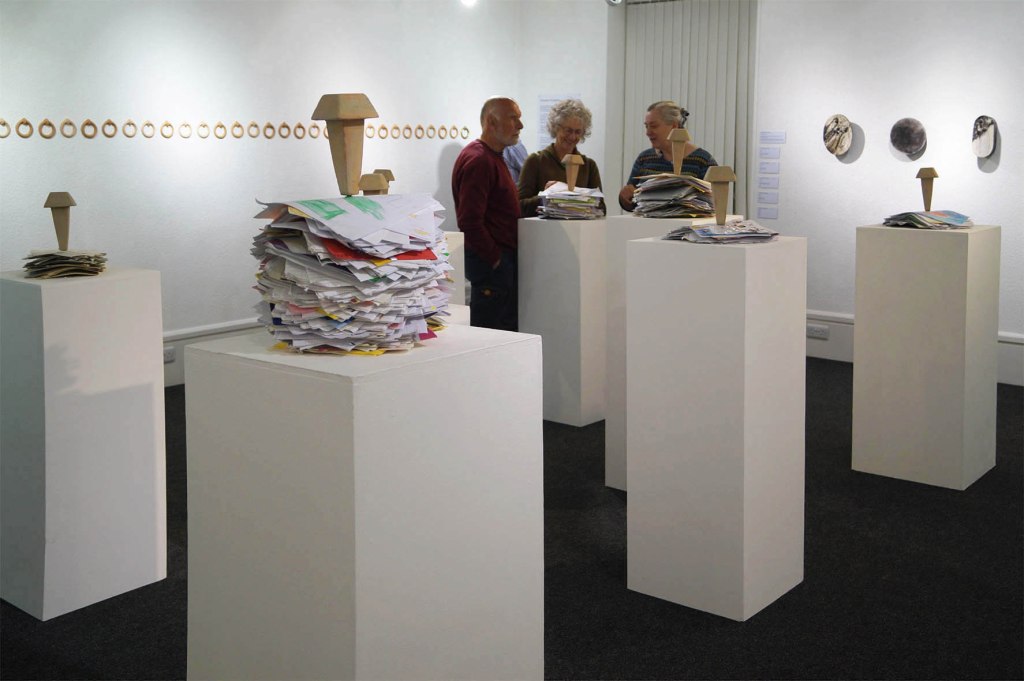
Installation
terracotta iron and paper variable measures. The Gallery MoMa Machynlleth. Wales
Sellerine, nails traditionally used to stretch canvases, here are reproduced on an enlarged scale and support stacks of pages torn from school notebooks originating from different countries and periods. Each sellerina holds stories of life, hope, and desire. Coloured, drawn on, written, and corrected, the pages become traces of the time of dreaming and of the possibilities that accompany childhood.
Installed at different heights, the sellerine mark the distances imposed by social contexts and places of belonging, shaping the horizon of each person’s possibilities.

Darnau o Defaid
terracotta and acrylic
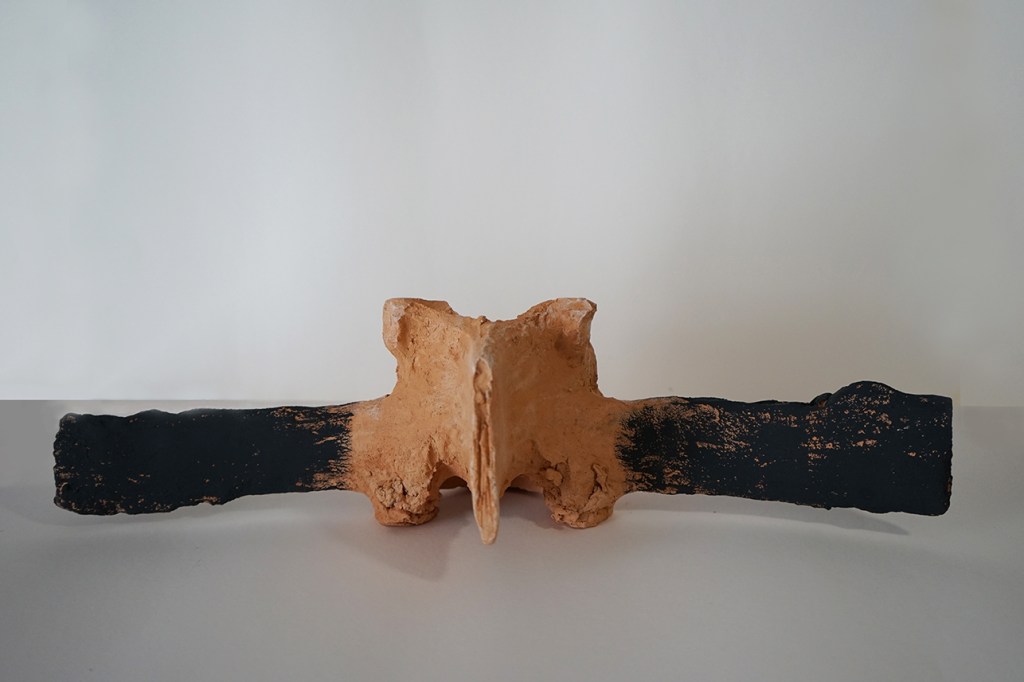
Darnau o Defaid II
terracotta and acrylic 11x50x19.5cm
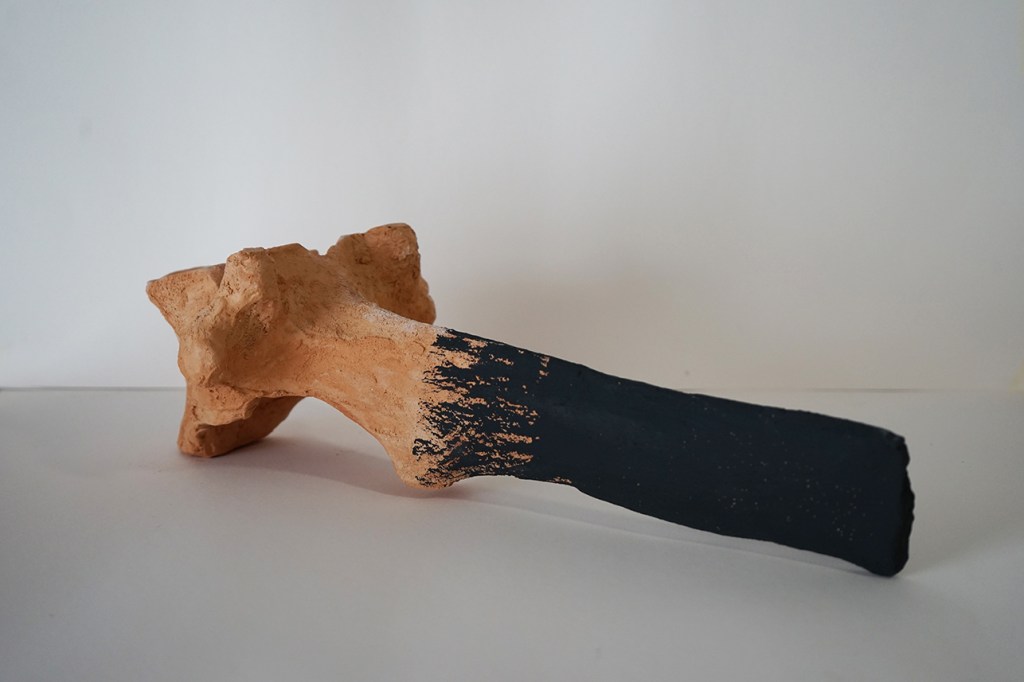
Darnau o Defaid I
terracotta and acrylic 11x19x44cm
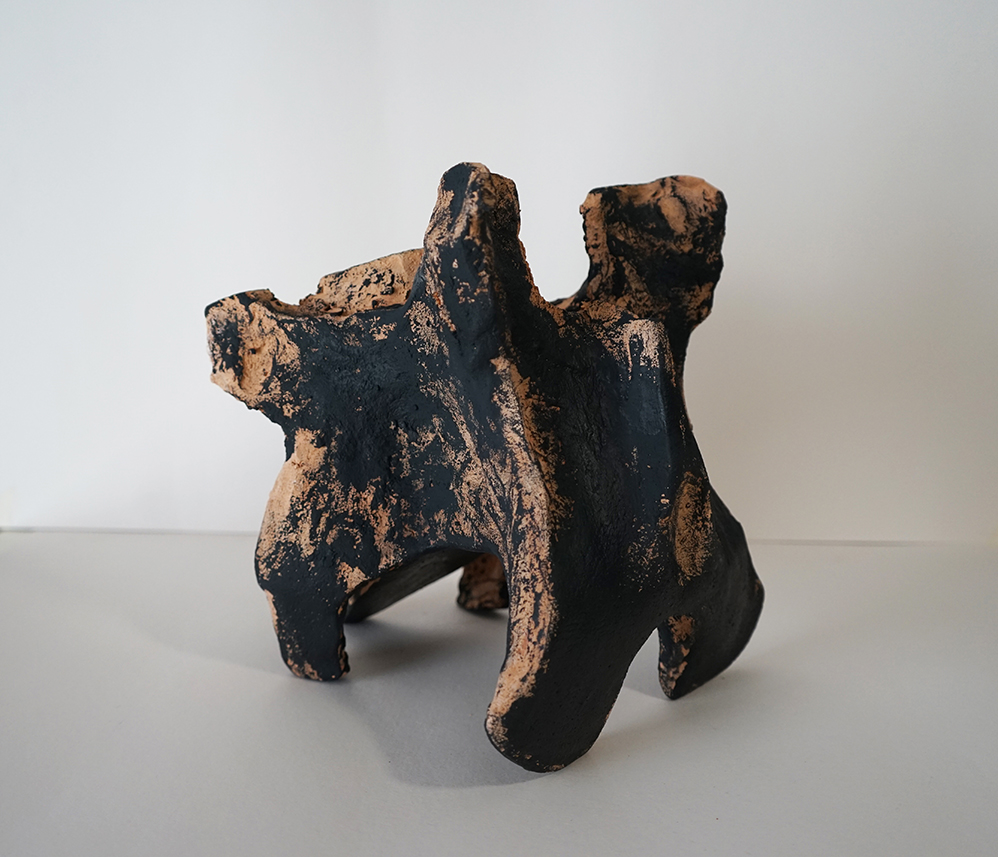
Darnau o Defaid III
terracotta and acrylic 25x21x20cm
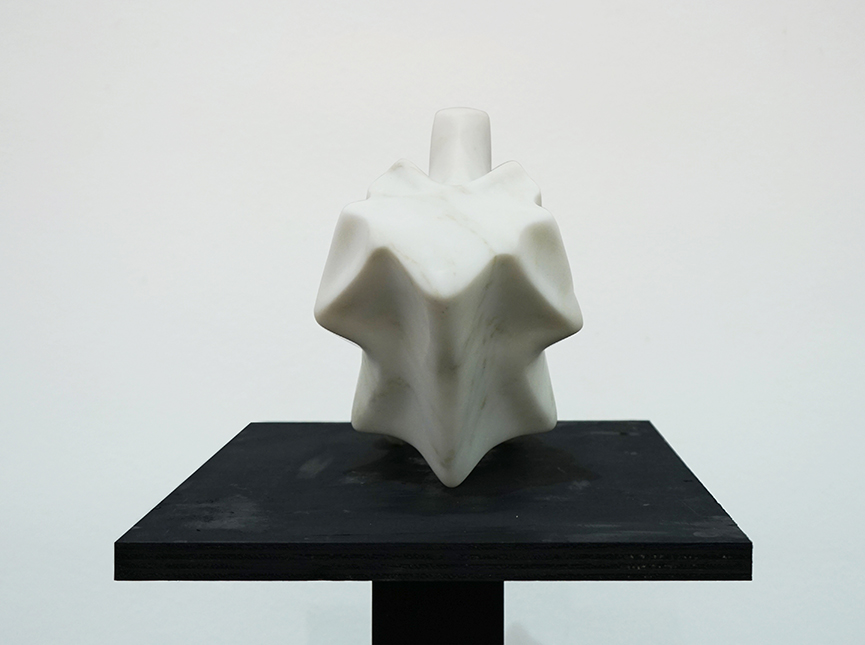
Darnau o Defaid IV
Carrara marble 22x20x15.5cm
Rings
Installation
terracotta and bronze variable measures. The Gallery MoMa Machynlleth. Wales
Thirty-six rings arranged on the wall in a single linear sequence: thirty-five in terracotta and one in bronze. The work reflects on the bond with one’s origins, understood as an intrinsically ambivalent condition, suspended betwe- en belonging and constraint, rootedness and limitation. These forms recall the iron rings still visible in the walls of Catania once used to tether working animals, which now have almost entirely disappeared. They bear witness to a past in which the relationship between people, animals, and place formed an integral part of everyday life.
Transposed into the present, the rings become signs of invisible bonds that continue to shape experiences, habits, memories, and fears, opening a reflection on the tension between immobility and the possibility of transformation. The Sicilian saying “moviti femmu” inhabits this threshold: a figure of paradoxical stasis that encapsulates the idea of movement without displacement.

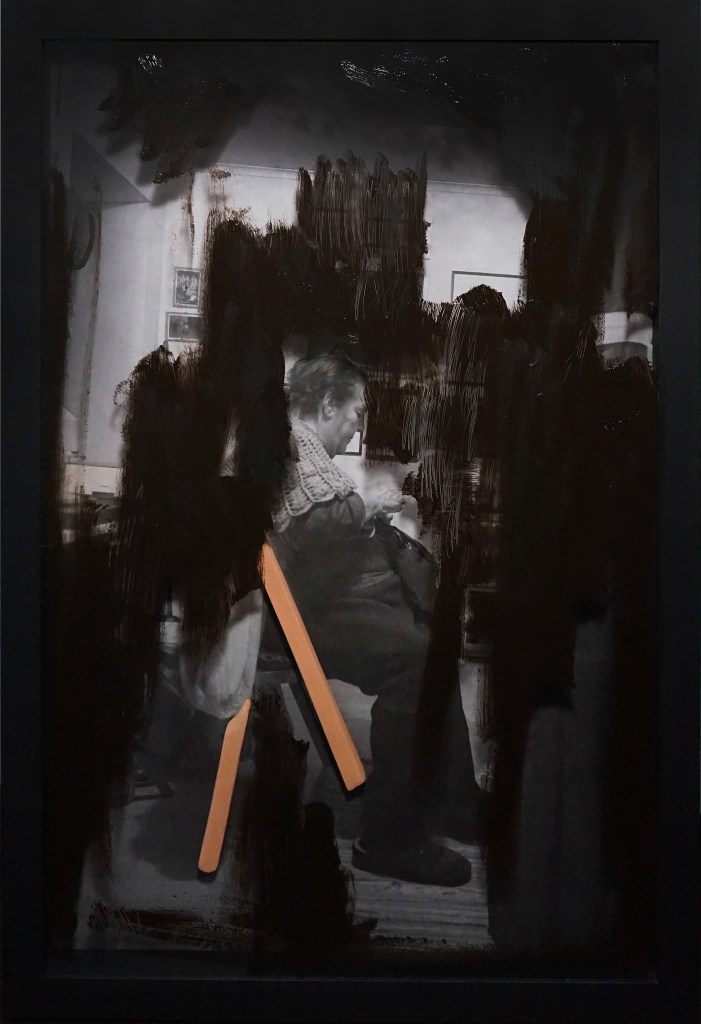
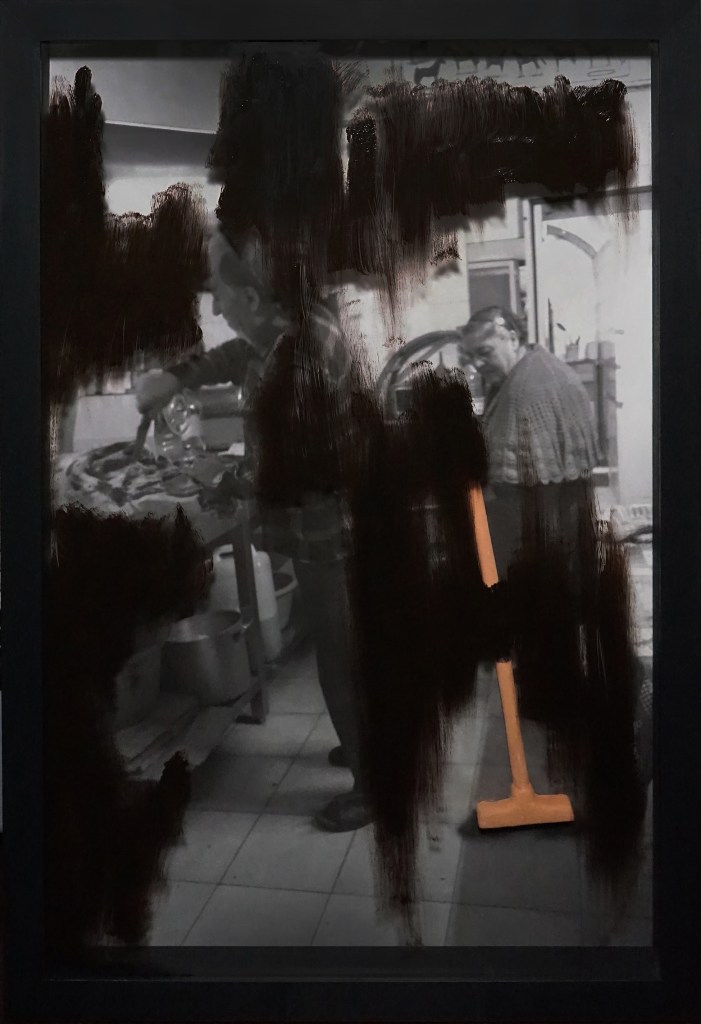
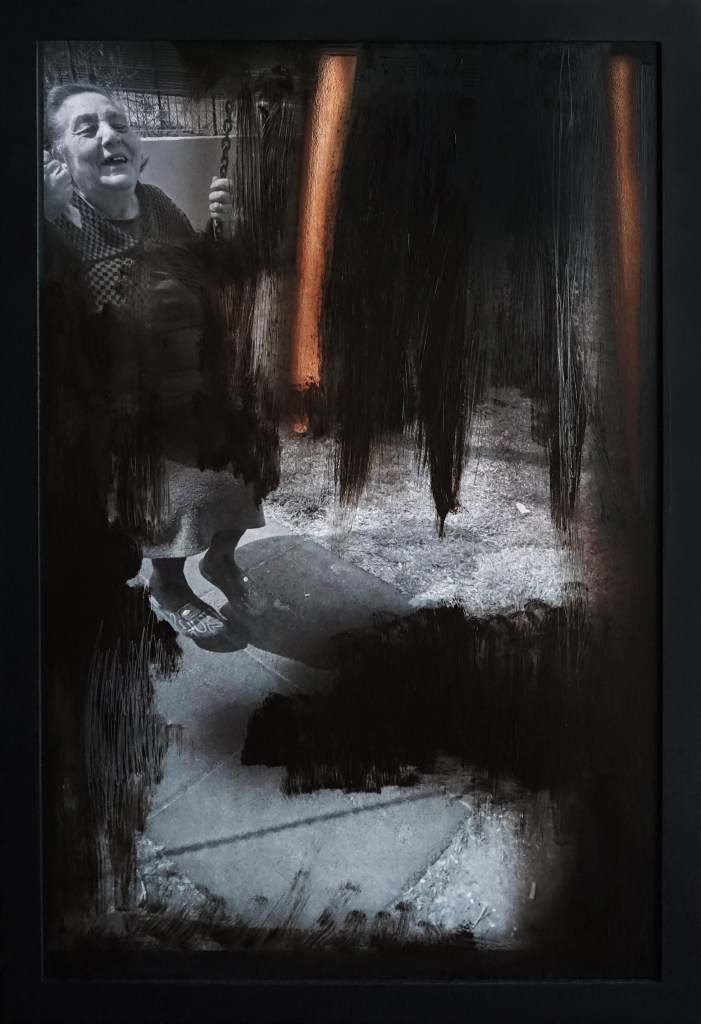
Missing VIII-IX-X
photograph, terracotta and oil on glass 96.5x66x6cm